After a quiet period in the meteor hobby (though CAMS and All-Sky work continued), I decided to resume visual observing after the full moon in July. My last night of observing had been nearly three months prior (April 22/23). The goal was to spot the first potential Perseids (PER), as well as the first Capricornids (CAP), Southern Delta Aquariids (SDA), July Pegasids (JPE), Gamma Draconids (GDR), and Antihelions (ANT). The weather forecast looked promising. Following the extreme heatwave in June, a second heatwave was expected in mid-July—though without such extreme temperatures and with much lower humidity. And, importantly, clear nights were predicted.
The first spell of clear weather lasted four consecutive nights. However, almost every night there was a threat of low-hanging clouds drifting inland from the Wadden Sea. Additionally, significant numbers of satellites were visible each night, some flaring brightly at times. Due to daytime work commitments, observations were conducted from the “meteor roof,” with the viewing direction always due south unless otherwise noted.
July 10/11, 2026
A fine 2.5-hour session under clear conditions. Transparency was good; the limiting magnitude reached 6.3 for an hour. A total of 23 meteors were counted, including 2 JPEs, 2 ANTs, and 1 SDA. The finest meteor was a white, magnitude -1 Sporadic (SPO) in Corona Borealis. The other meteors were faint. Additionally, two nice ISS passes were observed, the first at 22:38 UT. The space station moved from Boötes, through Hercules and Lyra, toward the eastern horizon. The second pass occurred between 00:10 and 00:14 UT, this time slightly lower in the sky.
July 11/12, 2026
Conditions were much the same as the previous night. This time, 22 meteors were spotted between 22:19 and 00:47 UT. These included 2 SDA, 1 CAP, 3 JPE, and 1 ANT. The finest meteors were two sporadic ones with a magnitude of +1.
There was another ISS pass at 23:18 UT, moving from Boötes toward Pisces. After 00:30 UT, a few small clouds drifted rapidly across the field of view. The session ended at 00:47 UT: the sky was becoming too bright for observation, and more cloud cover was moving in from the northeast.
July 12/13, 2026
Another clear night, though the sky was a bit hazier than on previous nights. The limiting magnitude (Lm) was 6.2. Despite this, 24 meteors were observed, including 1 PER, 1 CAP, 1 SDA, 2 JPE, and 2 ANT. This night I observed the first possible Perseid of 2026: a magnitude +4 meteor in Cygnus. The first hour was quiet, with only 5 meteors, while the second hour was significantly better, yielding 12. The most impressive meteor was a slow-moving +1 ANT traveling from Delphinus to Pegasus. There were also two ISS passes, at 22:49 and 00:14 UT. During the second pass, the ISS dipped into Earth’s shadow in the southern part of Ophiuchus. During this second appearance, two magnitude 0 satellites were also visible flaring simultaneously.
July 13/14, 2026
This night was somewhat hazier than the previous one; conditions were significantly worse, especially at lower altitudes. I cut the observation session short due to a busy workday ahead. It was a dull session; only 14 meteors were counted. A bright flash occurred at 23:04 UT, followed by no further flashes, leading me to suspect a fireball. However, more flashes appeared from 23:20 UT onwards, indicating lightning. Later, weather radar showed thunderstorms active in the Münster/Bielefeld region in Germany, moving eastward. One ISS pass was also observed.
July 16/17 2026
After two nights with increased cloud cover, observations were possible again tonight. This was the best night in terms of numbers, largely because theatmospheric transparency was excellent. A total of 29 meteors were counted, comprising 2 PER, 2 SDA, 2 CAP, 1 JPE, and 3 ANT. There were also more bright meteors; notably, a magnitude 0 Perseid. It was dark orange—something I had seldom seen before with Perseids. The finest meteor, however, was a beautiful magnitude +2 ANT that moved slowly throught Aquila. Later that night, I spotted another magnitude +1 Perseid.
Additionally, I observed another ISS pass at 22:42 UT, low in the southwestern sky. The current series of ISS passes over the Netherlands at night is coming to an end. While checking cloud cover in the northeast, I spotted a very bright satellite moving slowly through Perseus from east to west. For a long time, its brightness was magnitude -6. You don’t see that very often anymore, now that the well-known Iridium satellites are no longer visible; they could sometimes reach magnitude -8.
At 23:39 UT, there was a bright flash (the only one); I checked the all sky recordings later, but nothing was visible. According to Buienradar (a Dutch weather app), there was a thunderstorm active in northwest Germany moving further north. That was likely the source of the flash.
July 20/21, 2026
A beautifully clear and transparent sky tonight. Between 22:06 and 00:55 UT, 29 meteors were counted. Two bright meteors.
At 23:09:50 UT, a beautiful, fast, yellowish sporadic meteor appeared within the Summer Triangle—right in the middle of my field of view—displaying flares reaching magnitude -4 and a persistent train lasting 3 seconds. It was also beautifully captured by the all-sky camera (EN908). And at 00:21 UT, a lovely magnitude 0 Perseid appeared.
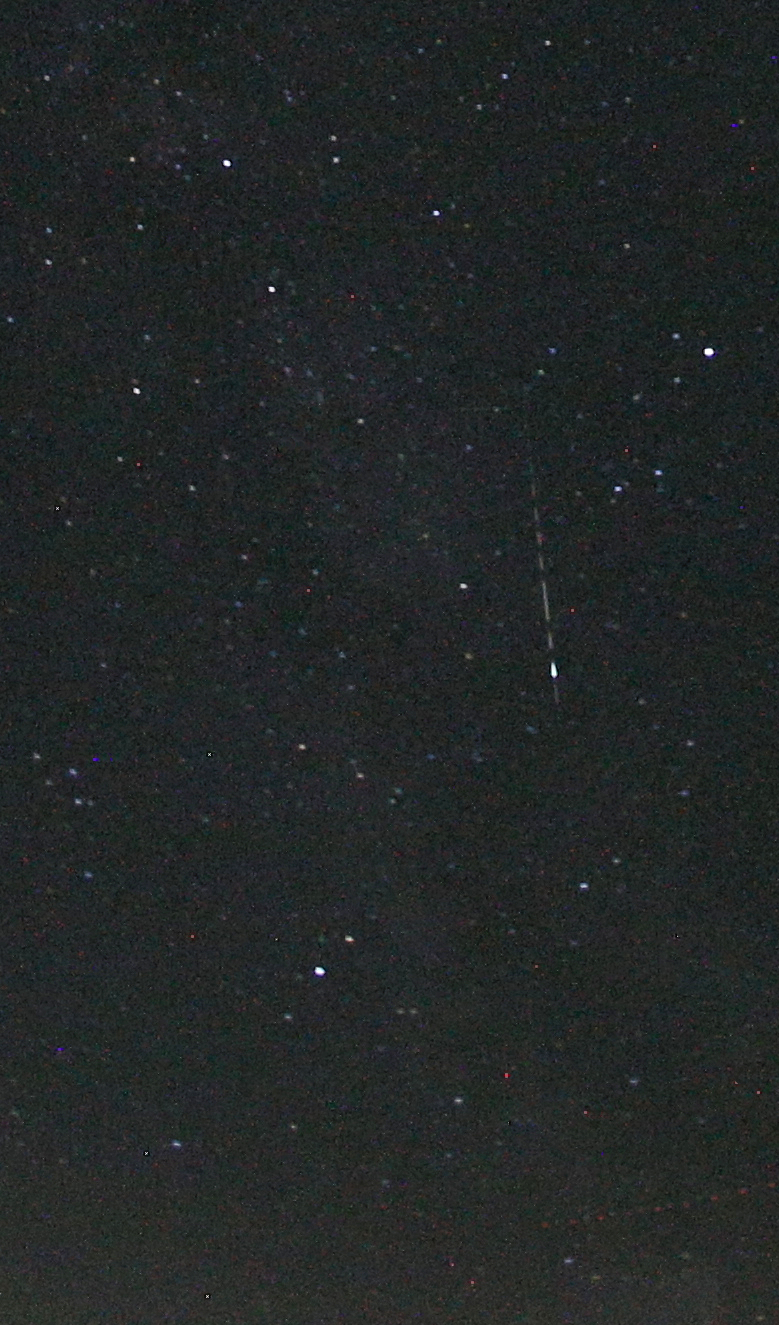
Figure 1. The fireball of July 20, 2026 at 23:09:50 UT, captured with my all-sky camera EN908.
July 24/25, 2026
Once again, a clear night—the last one before the full moon on July 28. Unfortunately, the air was slightly hazy. Cirrus clouds extended up to an altitude of 50 degrees in the south, so I shifted my FOV toward the north. Although the cirrus drifted slowly northward during the session and entered my field of view, it was simultaneously dissipating, so it barely hindered me. However, it did make classifying the southern summer showers somewhat more difficult.
Between 23:20 and 01:10 UT (1.833 hours of effective observation time), I spotted 23 meteors: 5 PER, 2 SDA, 2 CAP, 1 GDR, and 1 ANT. The GDR are the Gamma Draconids, which produced a brief outburst in 2016. The finest meteor was a slow +2 magnitude one that cut across Perseus and flared to magnitude +1 at the end; it also displayed a short wake. CAMS captured this meteor as well.
All in all, a successful July and good practice for—hopefully—a marathon session on Crete. See Table 1 for the results.
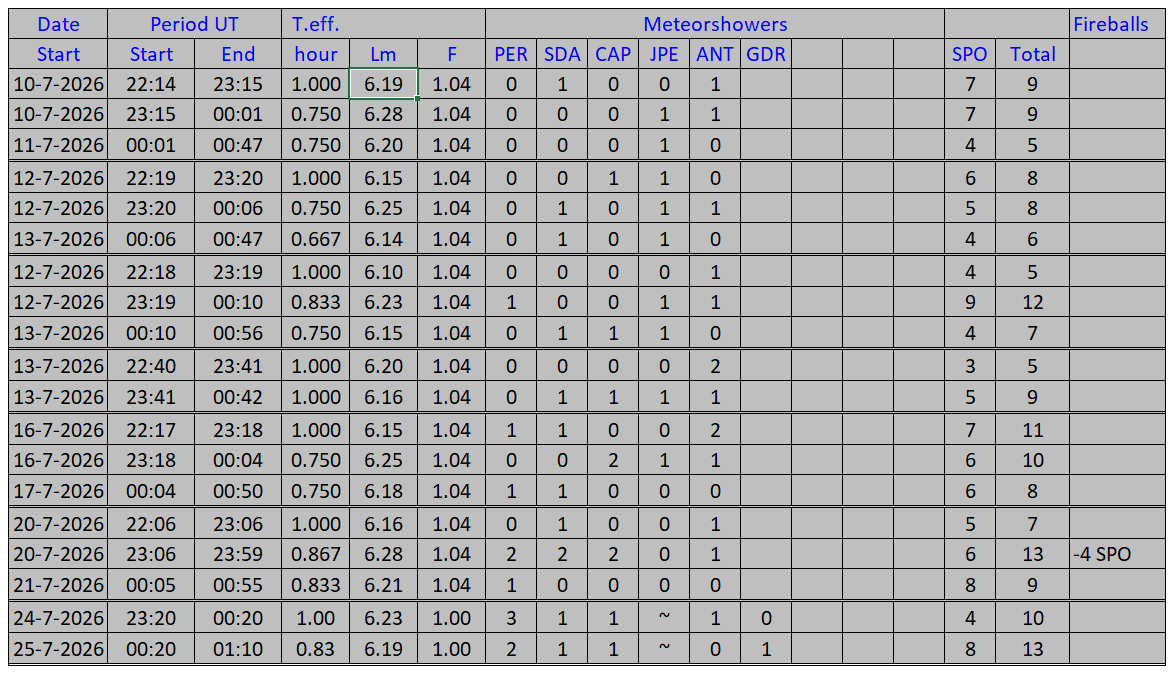
Table 1. Overview of authors observations in July 2026