Lorenzo Barbieri (CARMELo and AAB, Associazione Astrofili Bolognesi)
Mariasole Maglione (CARMELo and GAV, Gruppo Astrofili Vicentini)
Alberto Latini (CARMELo, Sezione Meteore UAI and IMO)
William Rivato (CARMELo and MarSEC, Marana Space Exploration Center)
Introduction
August is the month of the Perseids. Although no particularly intense activity was recorded this year, a peak in activity was observed on the night of August 13.
Methods
The CARMELo network consists of SDR radio receivers. In them, a microprocessor (Raspberry) performs three functions simultaneously:
- By driving a dongle, it tunes the frequency on which the transmitter transmits and tunes like a radio, samples the radio signal and through the FFT (Fast Fourier Transform) measures frequency and received power.
- By analyzing the received data for each packet, it detects meteoric echoes and discards false positives and interference.
- It compiles a file containing the event log and sends it to a server.
The data are all generated by the same standard, and are therefore homogeneous and comparable. A single receiver can be assembled with a few devices whose total current cost is about 210 euros.
To participate in the network read the instructions on this page.
August data
In the plots that follow, all available at this page, the abscissae represent time, which is expressed in UT (Universal Time) or in solar longitude (Solar Long), and the ordinates represent the hourly rate, calculated as the total number of events recorded by the network in an hour divided by the number of operating receivers. The time resolution is 15 minutes.
In fig.1, the trend of signals detected by the receivers for the month of August.
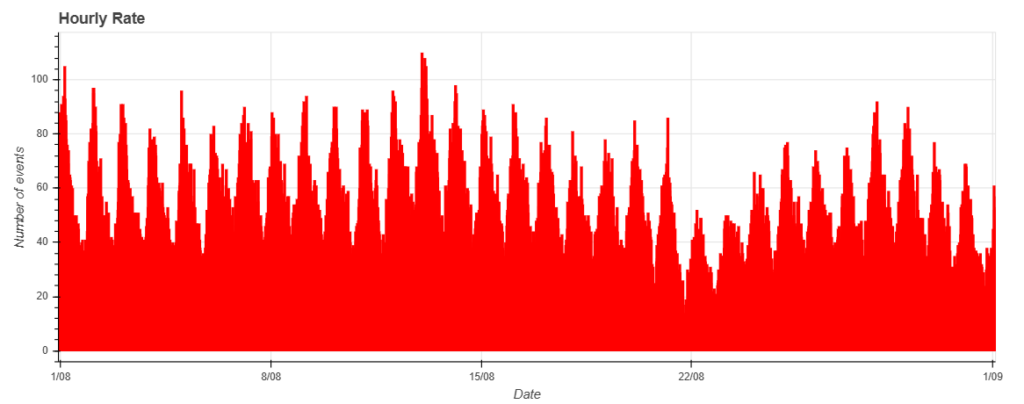
Fig. 1: August 2026 data trend.
Perseids
The Perseids (PER) are one of the best-known and most spectacular meteor showers of the year, active from July 17 to August 24. Peak activity usually occurs around mid-August, on the night of August 12–13.
The Perseids originate from debris left behind by Comet Swift-Tuttle, which Earth encounters every year during this period. The radiant is located in the constellation Perseus, from which the shower takes its name. The meteors are particularly fast, with an atmospheric entry speed of about 61 km/s, and produce bright, persistent trails, often accompanied by ionization trails that are clearly detectable even through radio observations.
In 2026, despite the favorable conditions provided by the new moon, visual observations revealed activity that appeared less intense than in previous years, with a relatively small number of meteors and few fireballs. Radio data from the CARMELo network partially confirm this trend. The hourly rate recorded at the peak, however, is comparable to that observed in previous years.
The construction of RZHR
By RZHR (Radio Zenithal Hourly Rate), we mean the hourly rate of radiometeors in a shower, calculated by processing data from meteor scatter receivers.
This tool allows us to make a significant leap in quality, moving away from the qualitative analysis we have conducted so far (which relied exclusively on graphs) and transitioning to the direct processing of data from our database. To do this, we developed a Python script with the help of the “Cursor” tool, an AI-powered code editor created by Anysphere. This support proved crucial in developing a satisfactory script.
First, it should be clarified that, in calculating the RZHR, we make certain approximations, including:
- We do not take into account that the varying geographical distribution of receivers causes them to “see” meteors from slightly different angles.
- We disregard the fact that observations are not isotropic but are influenced by antenna pointing, which favors a specific sector of the sky over the entire sky.
- We define a contribution as “sporadic” even though it may also include meteors from small showers.
The algorithm for this calculation uses data from the database of all meteors recorded by the CARMELo network. First, it asks the user to identify certain days on which no significant meteor shower activity is expected. These days are selected as close as possible to the date being analyzed. This data is then averaged to form a second database called the “sporadic average.”
This database is then subtracted from the one for the days under examination, during which a meteor shower is presumed to be present. Any negative values are eliminated, and the profile is smoothed using a smoothing function.
The figure is then divided by the sine of the radiant’s altitude above the horizon, calculated for an average Italian location in the same way as the algorithm used to calculate the ZHR (Zenithal Hourly Rate), which, as we recall, is:
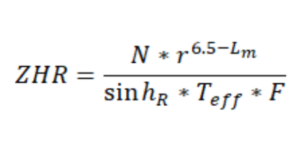 Where:
- N: number of meteors counted.
- Lm: the limiting magnitude of a star that is visible to the observer.
- r: shower’s density (the ratio indicating how many more meteors are visible for each magnitude; typically ranging from 2.0 to 3.5).
- hr: angular height of the radiant above the horizon in degrees.
- Teff: actual observation time (in hours).
- F: field-of-view correction factor.
The temporal resolution, which is 15 minutes in the original data, is retained at that value; therefore, the term H in RZHR should be considered as H/4.
To estimate the activity of the Perseids, the sample of sporadic meteors (in fig. 2) was collected in mid-July.
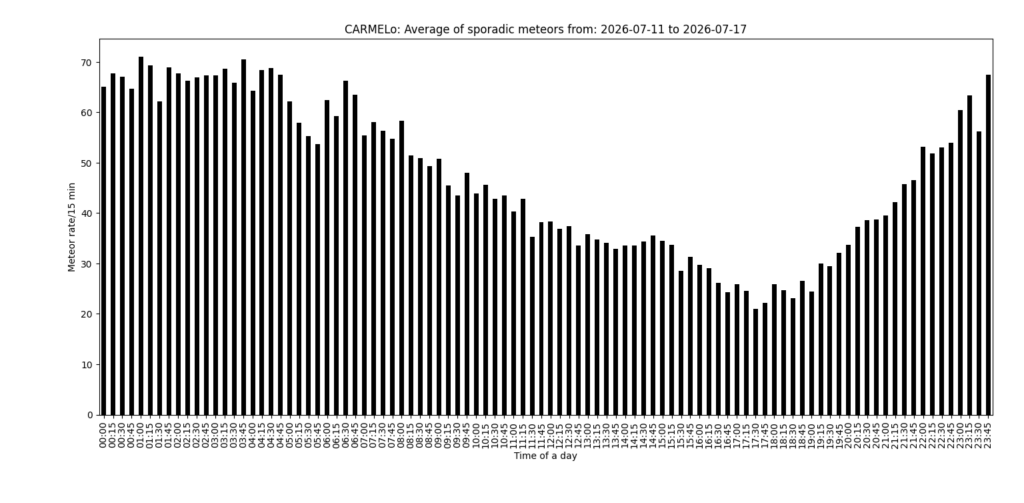
Fig. 2: A sample of sporadic meteors collected in July 2026 for analysis of the Perseids.
Fig. 3 shows the trend in meteor activity recorded by the network, limited to the hours when the radiant was above the horizon for most of the observing stations between August 2 and August 21 (between solar longitudes of approximately 129° and 147.5°).
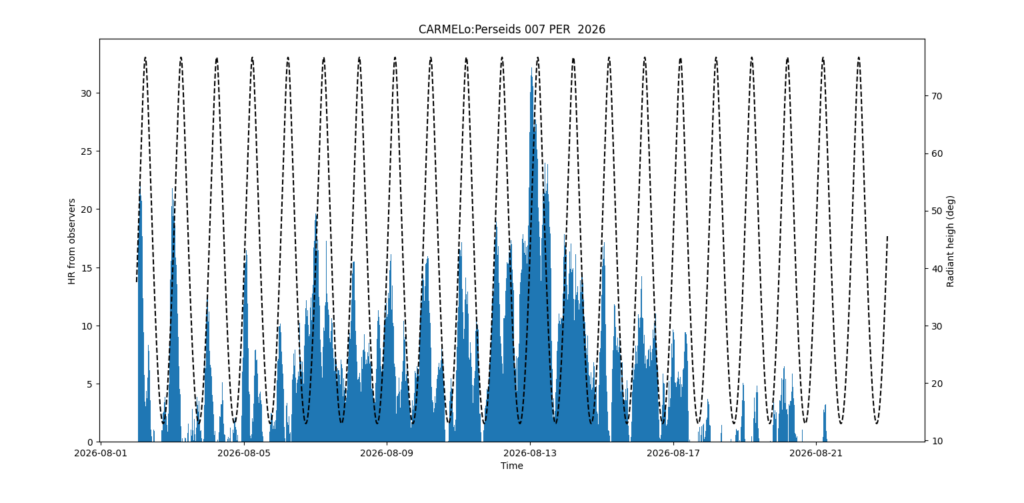
Fig. 3: Meteor activity trends between August 2 and August 21, 2026, limited to the hours when the radiant was at least 10° above the horizon, as a function of solar longitude, and the altitude of the Perseid radiant (dashed line).
It can be seen that most of the events attributable to the meteor shower are observed in the early morning hours, when the radiant reaches its highest point in the sky.
Calculating the RZHR using the algorithm we developed (1) yields the results shown in fig. 4.
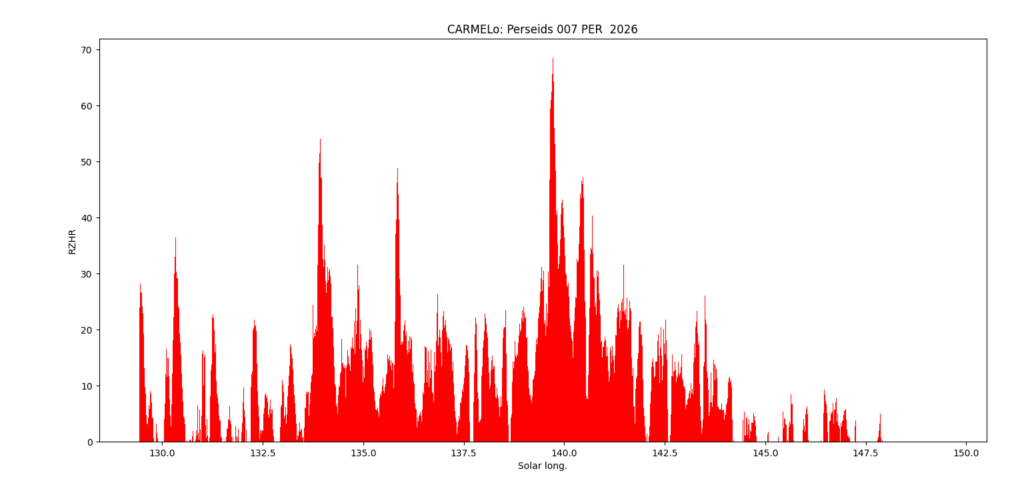
Fig. 4: Residual distribution of events.
The RZHR shows the main peak around 139.9° solar longitude, in agreement with observations from the International Meteor Organization (IMO). The Global Meteor Network (GMN), on the other hand, places the peak around 140.1°, a longitude at which CARMELo also records a brief increase in activity. A further increase was observed around 132.7° solar longitude, but it cannot be attributed with certainty to the Perseids, since other meteor showers were also active during the same period, including the 191 ERI, detected by the GMN.
Furthermore, looking at the duration of the radio echoes (fig. 5), on August 12 and 13 their average duration was longer than the overall average for the observed period. This behavior is consistent with the passage of the Perseids, whose meteors have, on average, greater kinetic energy than the background level of sporadic meteors.
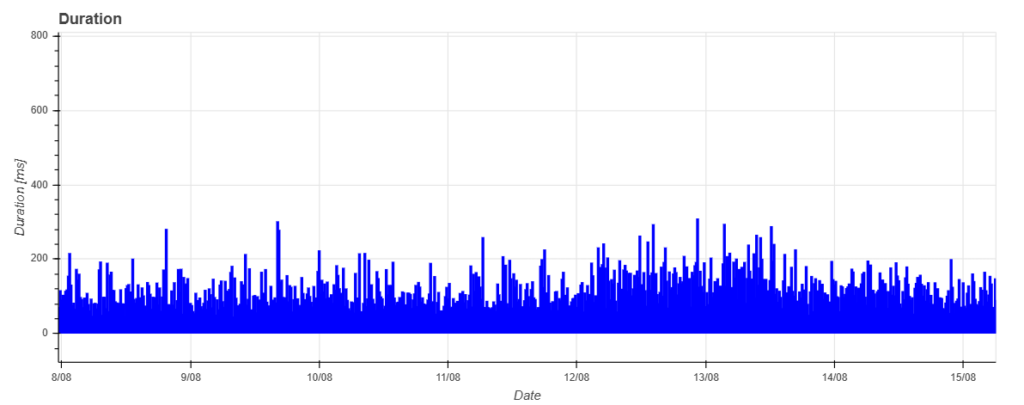
Fig. 5: Duration of the radio echoes detected by CARMELo between August 8 and August 15, 2026.
More showers
Throughout August, other meteor showers are also active and may contribute to the recorded activity. Among these are the Eta Eridaniids (191 ERI), active from July 31 to August 19 and peaking around August 7, at a solar longitude of approximately 135°. Their radiant is located at right ascension 41° and declination −11°, and the meteors have a high speed of about 64 km/s. However, this is a difficult shower to identify because the radiant remains very low on the horizon. The Eta Eridaniids may have contributed to the increases in activity observed between August 7 and 8.
The Kappa Cygnids (012 KCG) are also active during the same period, observable from August 3 to 28 and peaking around August 17 at a solar longitude of approximately 144°. The radiant is located at right ascension 288° and declination +55°, while the meteor velocity is significantly lower, at about 23 km/s. In this case as well, identifying them is challenging, both due to the significant overlap in timing with the Perseids and the lower kinetic energy of the meteors.
The fireball of August 13
On the evening of August 12, 2026, at 22:39:53 UT (00:39:53 Italian time on August 13), a particularly bright fireball was sighted from Switzerland (magnitude approximately -7/-8). The fireball was also photographed by two Swiss observation stations, which, through triangulation, confirmed that it was not a Perseid.
Although they did not detect the echo of the initial impact, the radio stations of the CARMELo network recorded echoes that were temporally consistent with that fireball. Fig. 6 and 7 show, respectively, the first echoes detected and a series of possible subsequent, fragmented echoes, which could be related to the progressive deformation and dispersion of the ionized trail produced by the meteor due to winds in the upper atmosphere.

Fig. 6: The first two echoes detected by the fireball on August 13.
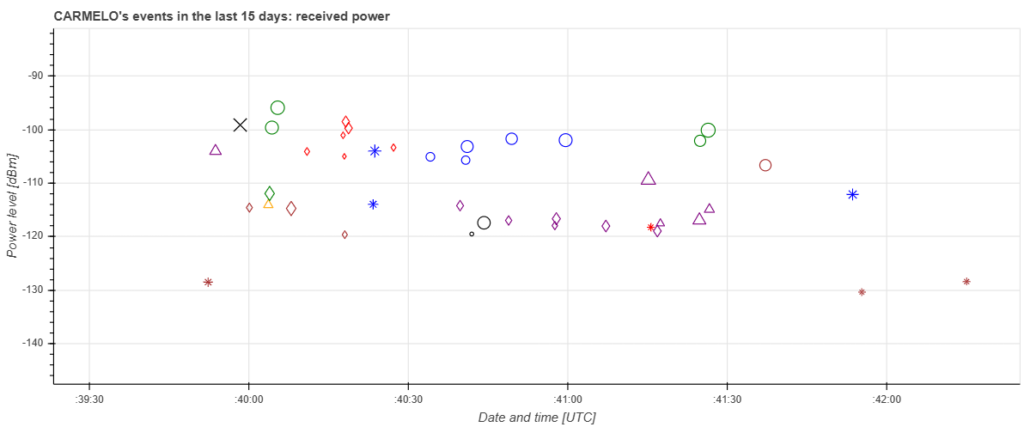
Fig. 7: A series of possible echoes following the breakup of the fireball on August 13.
The CARMELo network
The network currently consists of 18 receivers located in Italy, Spain, the UK, Switzerland and the USA. The European receivers are tuned to the Graves radar station frequency in France, which is 143.050 MHz. Participating in the network are:
- Lorenzo Barbieri, Budrio (BO) ITA
- Associazione Astrofili Bolognesi, Bologna ITA
- Associazione Astrofili Bolognesi, Medelana (BO) ITA
- Paolo Fontana, Castenaso (BO) ITA
- Associazione Astrofili Pisani, Orciatico (PI) ITA
- Gruppo Astrofili Persicetani, San Giovanni in Persiceto (BO) ITA
- Roberto Nesci, Foligno (PG) ITA
- MarSEC, Marana di Crespadoro (VI) ITA
- Gruppo Astrofili Vicentini, Arcugnano (VI) ITA
- Associazione Ravennate Astrofili Rheyta, Ravenna (RA) ITA
- Mike German a Hayfield, Derbyshire UK
- Mike Otte, Pearl City, Illinois USA
- Yuri Malagutti, Comano (TI) CH
- Leslie Fry, Trawscoed Ceredigion, Wales UK
- Brian Coleman, Redenham Observatory, Andover, England UK
- Radio club La Salle University, Barcellona ESP
- Alberto Latini, Carona (TI) CH
- AstroCampania, Agerola (NA) ITA
The authors’ hope is that the network can expand both quantitatively and geographically, thus allowing the production of better quality data.
References
(1) L. Barbieri, M. Maglione (2026): May 2026 CARMELo report, eMetN Meteor Journal