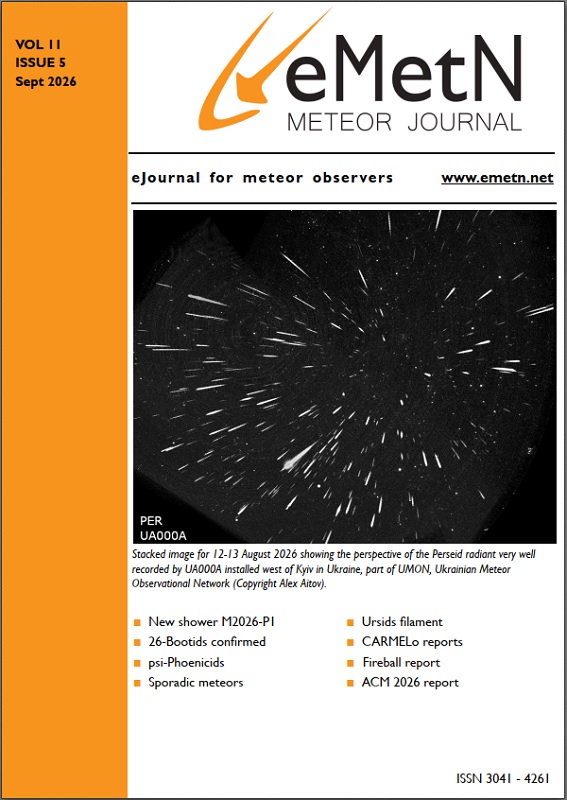
Abstract: A summary report is presented about the 12th Meteoroids Conference which took place from 7th July until 11th July 2025 at Curtin University Bentley, Perth Western Australia 6102.
Introduction
Meteoroids 2025 in Perth Western Australia was the 12th conference on meteor astronomy since the first Meteoroids conference was organized in Smolenice, Slovakia in July 1992. With the Covid epidemic the 2022 conference was conducted online meaning 2025 was the first time in 6 years that delegates could meet in person.
The 2025 conference was organized by Curtin University. 78 participants registered to attend in person with another 7 registering to participate online. The program with links to the abstracts in PDF can be found online. A conference is more than just a series of oral and poster presentations. Much of the time was spent on formal and informal sessions, discussions and social outings.
In this report we will give a short overview of the different sessions.
Figure 1 – The Meteoroids 2025 logo.
Monday 7th July
The conference commenced with a registration session at 8h30m am on Monday 7 July. The conference was opened with a welcome from Ellie Sanson (LOC Chair), Gretchen Benedix (Curtin Associate Deputy Vice Chancellor – Research) and Pavel Koten (SOC Chair) who also presented the first lecture of the conference on meteor clusters and tracing meteoroid fragmentation in near Earth Space.
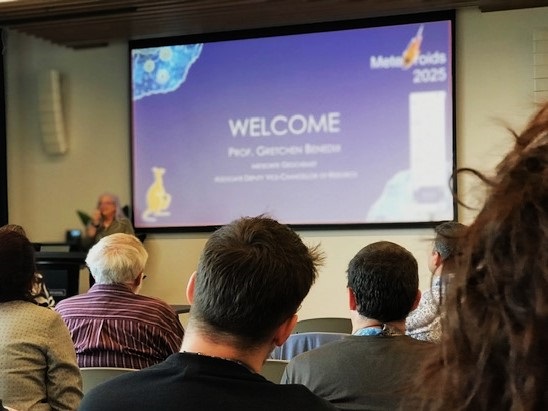
Figure 2 – Gretchen Bennedix officially opens the conference.
The day was divided into a series of short lectures with three main themes. Within each theme there were a range of speakers who presented their topics in short twelve minutes timeslots followed by a three-minute question time. The keynote speakers were given double this timeframe.
The themes for the day were:
- Composition and Physical Properties – featuring clustering, fragmentation, the physical characteristics of shower meteoroids inferred through dynamic nested sampling, comparing mechanical strengths of real and simulated meteoroids, the AMOS global meteor network presented by Juraj Toth, ongoing investigations with the Lowell Observatory Meteor Camera Network, comparative analysis of meteor spectra observed simultaneously from multiple locations, modeling of faint meteors and bolides using AMOS all sky data and a novel approach for revealing dynamic disintegration of irregular shaped meteoroids using a particle sintered model.
- Future Methods and Techniques – featuring machine learning in meteor science, presented by Simon Anghel, 10 years of the digital Desert Fireball Network from meteorites to space debris, the use of events-based cameras, a real time all sky fireball camera array prototype DFN initial results, Investigation of the possibilities of simultaneous meteor observations from Russia and Tajikistan, classical histogram analysis of radar and optical meteor data and enhancing meteoroid research through the NASA Science Explorer.
- Career sessions – opportunities for career paths in space research.
There were three breaks during the day for morning tea, lunch and afternoon tea. These featured delicious canapes of food and a range of drinks all of which were enjoyed by each and every participant.
At the conclusion of the day’s presentations a welcome function had been planned to be held at the Perth Observatory located at Bickley some 35 km east of the Perth CBD. However, inclement weather saw this event cancelled and replaced by an informal meal and gathering at Curtin University. This finished at around 9h30m pm.
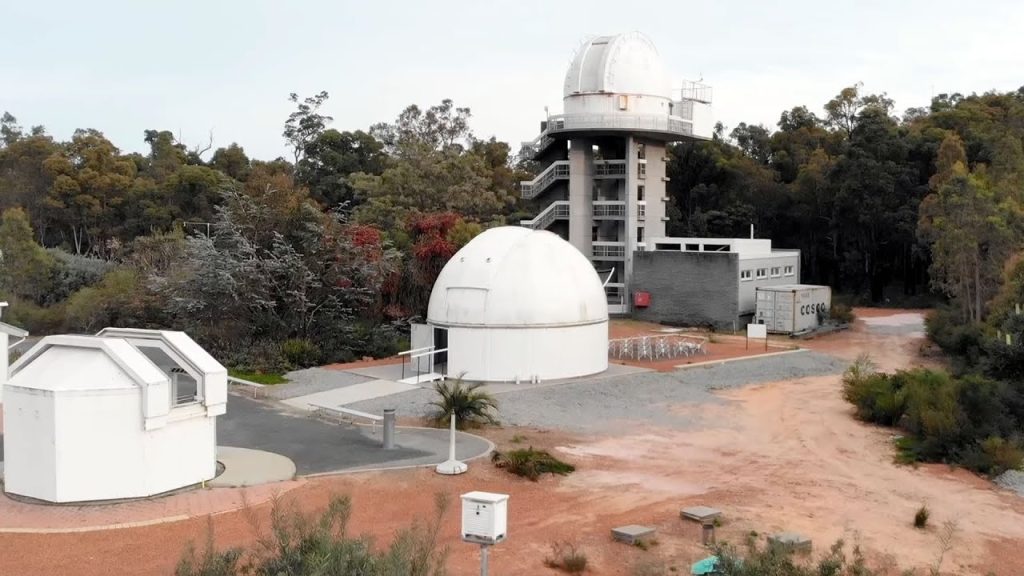
Figure 3 – Perth Observatory.
Tuesday 8th July
The Fourth Session “Meteor Physics and Chemistry” focused on the physics of a meteoroid flight in the atmosphere. The presentations covered a variety of topics including meteor spectroscopy advances presented by Adriana Pisarčíková, spectroscopic observations of mm sized meteors, the annual variation of sodium in the Geminid spectra over 6 years, proposal of a new long-life mechanism of persistent meteor trails and the lateral spreading of meteoroid fragments.
The fifth session “Entry Acoustics” consisted of four talks concerning meteoroid entry and sounds. First the Perth Array results were presented followed by infrasound analysis of HTV Missions and rocket launches from Tanegashima Space Centre Japan. Then infrasound observations for three SRC re-entries. The last talk was by Jana Clemente and covered the interesting topic of seismo-acoustic entry signals of fireballs.
In the afternoon the sixth session covered meteorite recoveries in Oman, New Zealand, the UK and Australia. A wide range of approaches were revealed by the speakers including the use of drones to recover meteorites in remote places such as the Nullarbor Plain in Australia.
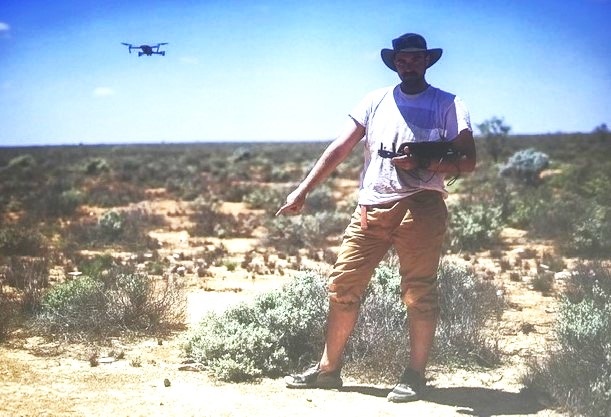
Figure 4 – Hadrien Devilleboix hunting meteorites on the Nullarbor Plain Australia using drones.
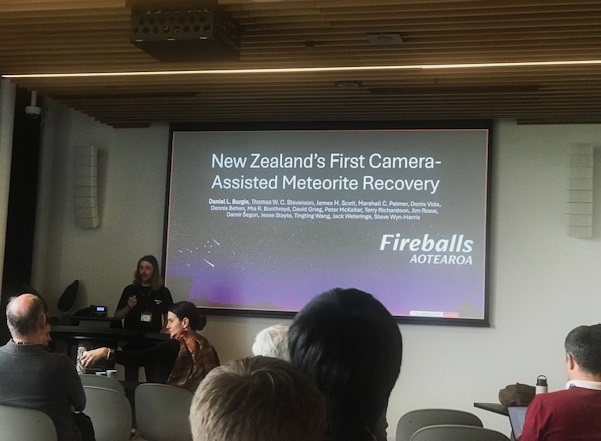
Figure 5 – Luke Burgin describes the first New Zealand camera assisted meteorite recovery.
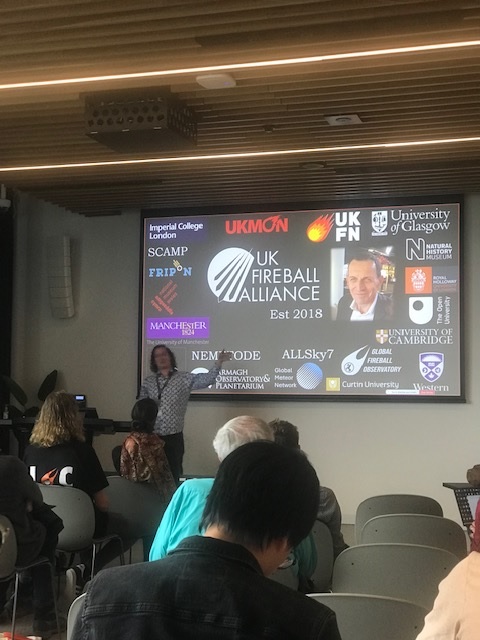
Figure 6 – Luke Daly and the UK Fireball Alliance.
Luke Daly conducted a very entertaining talk on the UKFAll rising – the expansion of the UK Fireball Alliance. Luke demonstrated how the partnership between professional researchers, amateur astronomers and the general public could all work together to successfully recover meteorites.
The seventh session concerned the influx of Interplanetary and Interstellar meteoroids. Margaret Campbell-Brown commenced this session with an interesting talk connecting meteor radar observing biases with simultaneous optical observations. This was followed by a novel approach by Gregg Cole to predict how interstellar material from Alpha Centauri could be delivered to the solar system and fall upon the Earth. Further talks were about debiasing meteor flux estimates using the DFN Clear Sky Survey, understanding the impact risk and preparing future instrumentation. Other talks were about using Antarctic/Greenland dust deposits with meteoroid models and using the lunar impact records to decipher the flux of kilometric asteroids on Earth. This session concluded with a vigorous, but respectful panel discussion concerning interstellar meteoroids. This caused much interest given the recent entry of Comet C2025 N1/ATLAS into the Solar System.
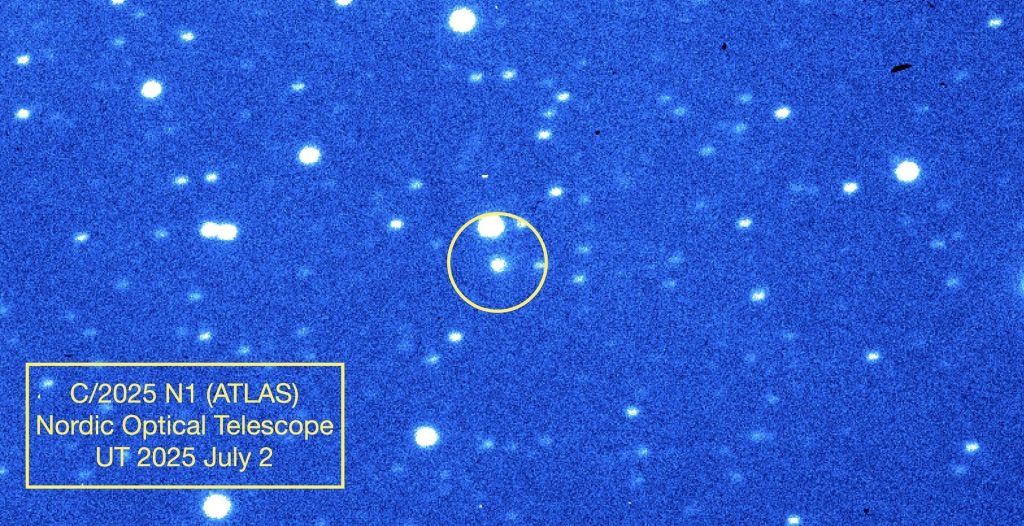
Figure 7 – Comet C2025 N1/ATLAS position on 2 July 2025 circled.
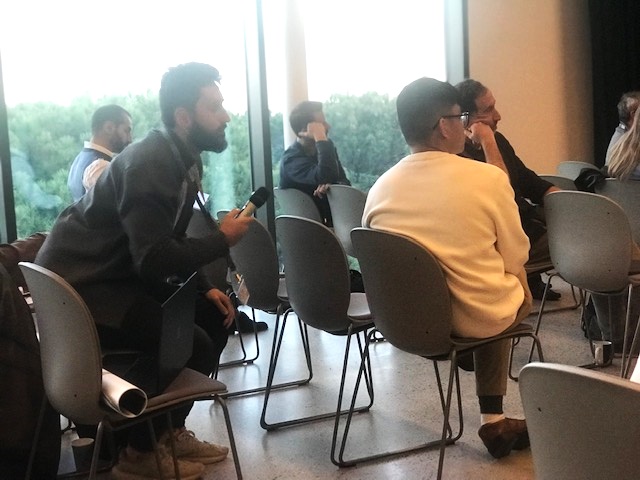
Figure 8 – Group discussion.
Wednesday 9th July
The eighth session covered talks on Meteoroids in Space. The first talk was by Eloy Peña Asensio on the topic of the ESA’s LUMIO mission applying meteor characterization through far side lunar impact flash observations.
Jack Lopez presented a talk on the effects of meteoroids as illumination of lunar surface on water-ice stability. Mark Millinger was the final speaker with the topic mitigating meteoroid impact risk and preparing future instrumentation.
The ninth session was an information poster session. There were 24 interesting posters on display. Conference participants spent just over an hour viewing and in discussion among one another and with those displaying the posters. These discussions continued over yet another delicious lunch.
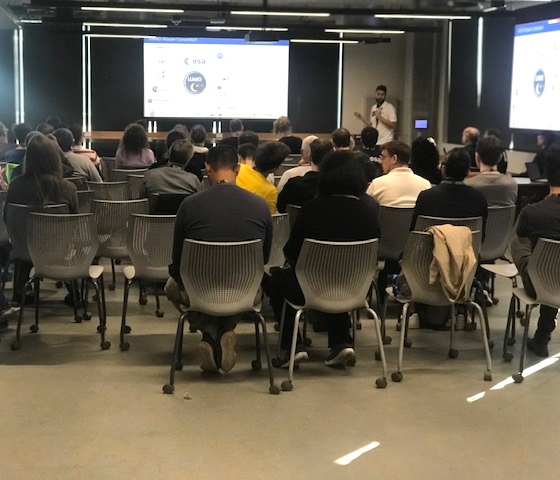
Figure 9 – Eloy Peña Asensio and the ESA’s LUMIO mission.
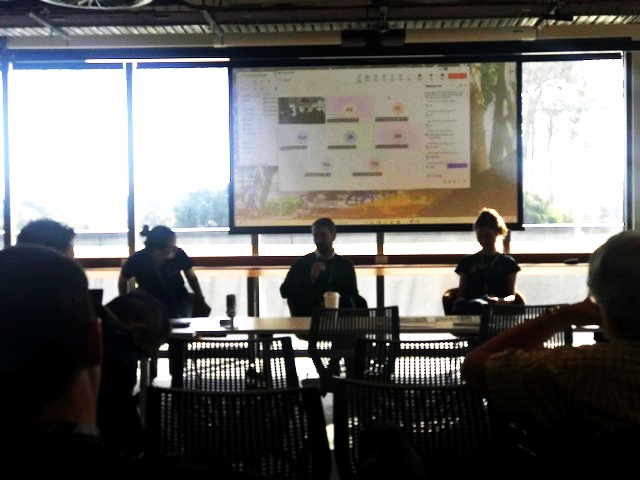
Figure 10 – Poster session with brunch.
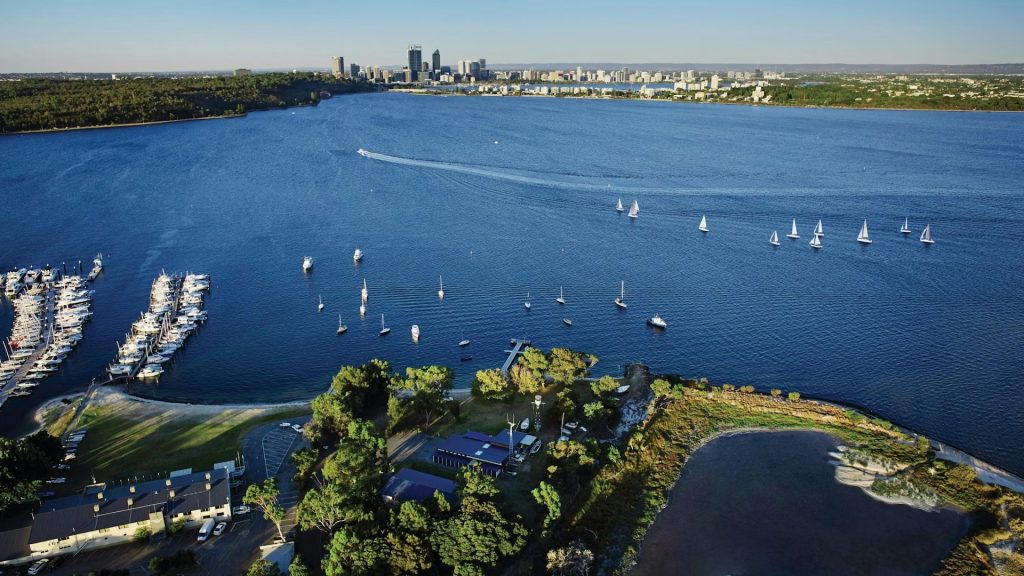
Figure 11 – Swan River.
After lunch it was time for excursions. Some participants spent the afternoon sailing on the Swan River whereas others paid visits to some of the laboratories and other places of interest around the Curtin University Campus.
Thursday 12th July
The 10th Session of the conference was concerned with Planetary defense before impact and upon impact. There were 9 talks on this topic. Speakers included David Coward, Peter Brown and Elizabeth Silber The talks were Planetary Defence Activities of the ESA, the Pan Starrs search from Near Earth Objects including potentially hazardous comets, the Southern Hemisphere Asteroid Research Consortium SHARC, hypervelocity cratering and disruption of Hydrous CM Chondrite and CI Simulant, the search for hydroacoustic signals from bolides, dynamical and physical properties of Decameter size Earth impactors, the 20 May 2023 bolide over NE Australia, Ground to space observations and finding fireballs in lightning using GOES weather satellite data.
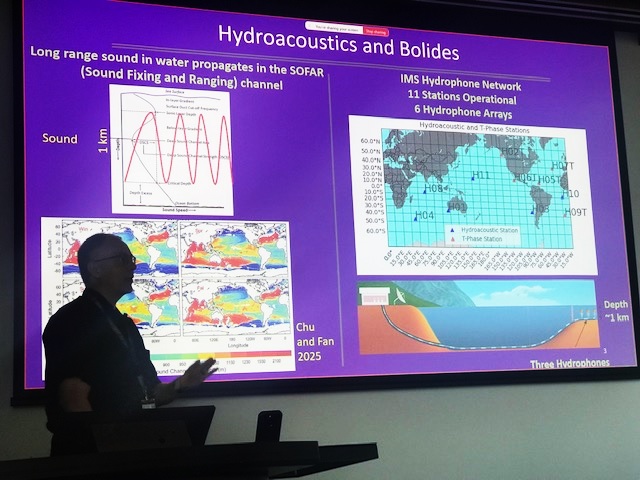
Figure 12 – Peter Brown speaking on searching for hydroacoustic signals from Bolides.
A panel discussion concerning imminent impactors followed. Many questions were raised about the 2029 Apophis flyby. Fortunately, Apophis will miss the Earth.
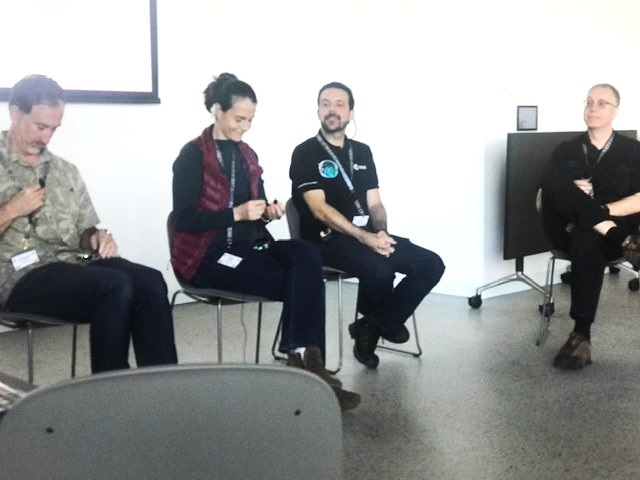
Figure 13 – Panel discussion with at left Nicholas Moskovitz and Ellie Sansom, Peter Brown seated at right.
After lunch the 11th Session was concerned with Dynamical evolution of meteoroids. Talks covered Missing Pieces: The atmospheric filter and the curious case of carbonaceous chondrites, a near Earth object model calibrated to Earth impactors, forecasting the 2025 Draconids, the dynamical history of the kappa Cygnid and August Draconid Meteoroids followed by preliminary results concerning the origin of the Geminid Meteor Stream.
The 12th session for the day was about Space debris both natural and human produced. Benjamin Hartig spoke about space debris re-entries over Australia and included a survey of events, environmental risk and correlation with Earth Observation imagery. Belia Hatty spoke about the Desert Fireball Network capturing images of a Russian Soyuz re-entry over Australia.
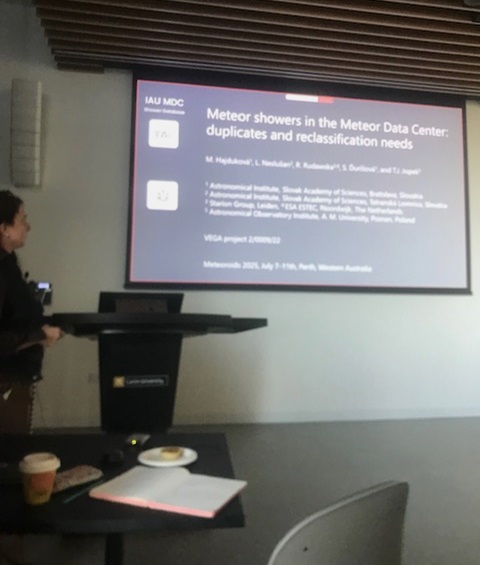
Figure 14 – Maria Hajdukova presenting her talk.
The 13th and final session for the day was the IAU Meteor Commission 22 business meeting. The first item concerned the official meteor shower list. Maria Hajdukova described the steps that have been taken to remove duplicate showers. Also, a new way to standardize the nomenclature of meteor showers using a number designation rather than the traditional method. A passionate, robust but very respectful debate followed. The meeting attendees were divided into two camps: those who wanted to implement the new nomenclature and those who preferred to keep the traditional names. In the end after each side presented their views time ran out before a clear consensus if any could be reached.
The second item was to announce the organizing committee members for 2024–2028.
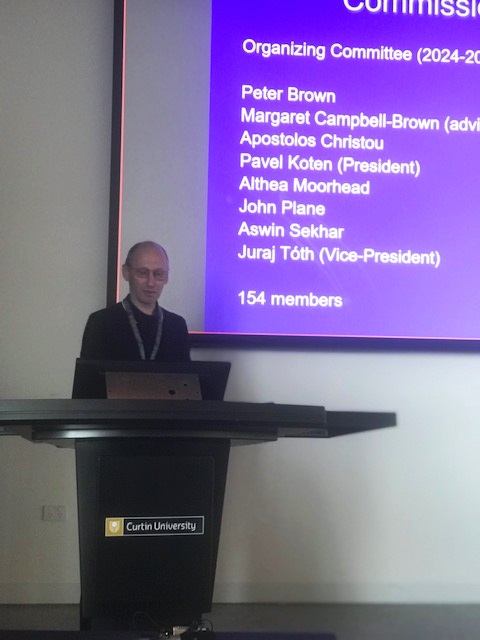
Figure 15 – Announcing the Organizing Committee Members for 2024 to 2028 for Commission 22.
The third and last item of the Business meeting was to decide where the 13th Meteoroids Conference was to be held. It was decided to accept the bid by the European Space Agency Facility (ESAC) located in Villafranca del Castillo, about 30 km West/Northwest of Madrid pending capacity.
Thursday evening saw participants travel to the Western Australian Boola Bardip Museum for the conference dinner. Participants and guests were seated at a long table and served a wonderful four course meal featuring, fine Western Australian wines and food. A good time was enjoyed by one and all. After the dinner some of the younger participants continued celebrating in a couple of the bars in the Northbridge District of Perth.
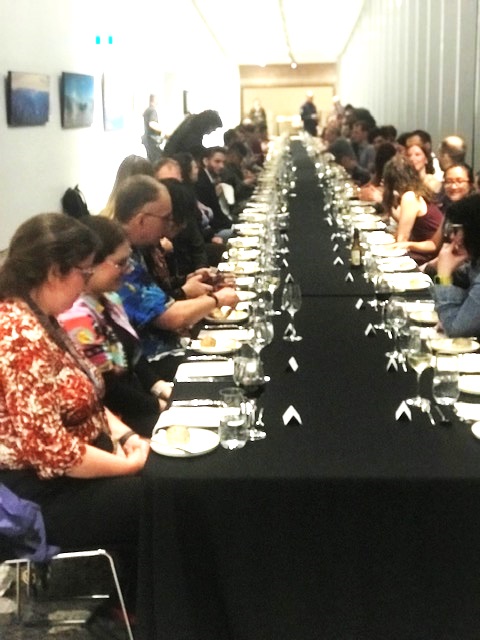
Figure 16 – Conference Dinner held in the WA Museum.
Friday 11th July
The final session of the Conference concerned Meteoroid sources. The topics covered were the origin of our meteorites in the asteroid belt, searching for tidal disruption signatures amongst NEA’s and impact data, Analysis of FRIPON Meteoroid Orbits and their association with known NEA’s, which meteoroids are from asteroids and which are from comets? Meteor showers as a tool to investigate evolutionary history of the parent comets, reassessing 1200 meteor showers and their links to the near-Earth environment. Observations of the outburst of the tau Herculid Meteor Shower in 2022 and the Investigation of the delta Cancrid Asteroid Meteoroid Complex. Highlights of this session were the presentations by Peter Jenniskens, Tom Do and Junichi Watanabe.
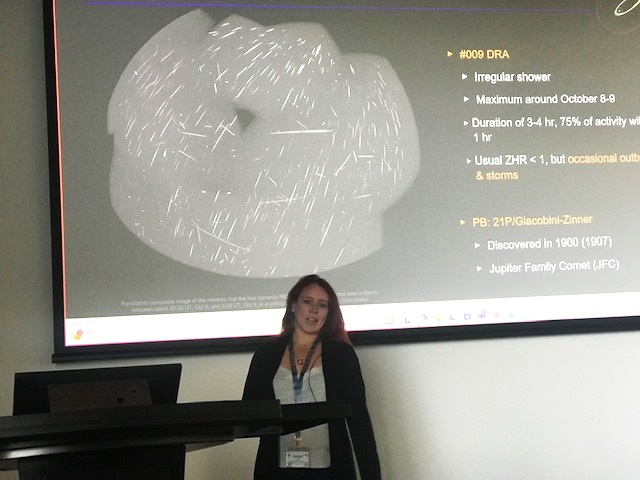
Figure 17 – Auriane Egal with her talk about forecasting the 2025 Draconids.
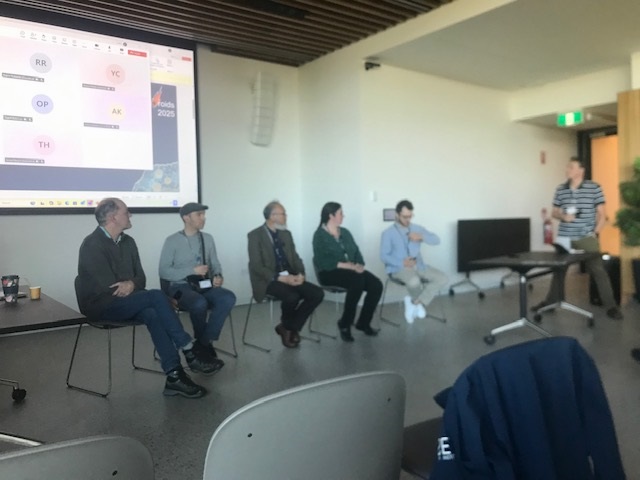
Figure 18 – The discussion panel from left to right; Peter Jenniskens, Jeremie Vauballion, Junichi Watanabe, Margaret Campbell-Brown, Patrick Shober and Hadrien Devillepoix (standing).
When the formal talks on Meteoroid Sources concluded, Hadrien Devillepoix hosted a panel discussion concerning outstanding questions in linking meteoroids and their parent bodies.
After the panel session it was a matter of thanking the organizing committees who did an amazing job with ensuring the Conference ran so smoothly. Well done for making this event one to remember.