
It is very difficult for those who knew Enrico Stomeo well to summarize all the work he carried out in the field of meteoritics. I met Enrico Stomeo in January 1983 through postal mail; at that time, the Internet and email did not yet exist, things that were still science fiction back then. Shortly thereafter, I met him in person at the Lido di Venezia, where he lived at the time. I was beginning to seriously devote myself to the study of meteors and found in Enrico a person who was extremely knowledgeable on the subject; he introduced me to meteoritics, the branch of astronomy that deals with all phenomena related to meteor phenomena, at that time only on Earth, but today also on other planets in the solar system.
Enrico was an architect, an employee of the City of Venice whose job was to combat illegal construction in a city as delicate as a Murano glass. Despite lacking a degree in a scientific field, Enrico acquired professional-level knowledge of meteoritics: this knowledge was channeled into both actual research and public outreach.
Enrico is particularly remembered for having led the Meteor Section of the UAI (Italian Amateur Astronomers Union) for over forty years, as well as for having conducted visual and photographic observations during that same period, and for having created, in June 1980, the newsletters of the UAI Meteor Section. The newsletters contained observations from the Section’s observers, reports of fireballs, and news drawn from all kinds of Italian sources, but especially from abroad, broadening the horizons of Italian observers and allowing each observer’s observations to take on true scientific significance by linking together like a giant puzzle in which the aggregated data formed the pattern of all the meteor showers throughout the year.
He was highly active in representing the Section, participating in numerous national and international conferences and meetings such as the IMC (International Meteor Congress) in Frasso Sabino (Italy, September 23–26 September 1999), Cerkno (Slovenia, 20–23 September 2001), Porec, Croatia (2009), Poznan, Poland (2013), Mistelbach, Austria (2015) and the meeting of Italian meteor observers on 2 July 2005 in Pruno (Stazzema, LU).
In the field of outreach, Enrico’s activities expanded in many directions, the main one being to raise awareness of the Meteor Section of the UAI (Italian Amateur Astronomers Union) in Italy and abroad, establishing contacts with all those interested in this field, holding lectures and courses at the University of the Third Age in Venice’s historic center, and participating in numerous annual conferences of the UAI.
On the international stage, Enrico began forging ties with amateur astronomers and professional astronomers as early as the 1970s: this desire for collaboration was also developing independently among amateur astronomers in other countries and led first to the founding of FEMA (Federation of European Meteor Astronomers), and then, after its dissolution, to the founding of the IMO (International Meteor Organization) under the leadership of Paul Roggemans. I must say that at the time I did not fully grasp the scientific potential of this movement born of a spontaneous convergence: as has often happened in the past, when an idea is ripe, its blossoming is merely a matter of time, opportunity, and the right people.
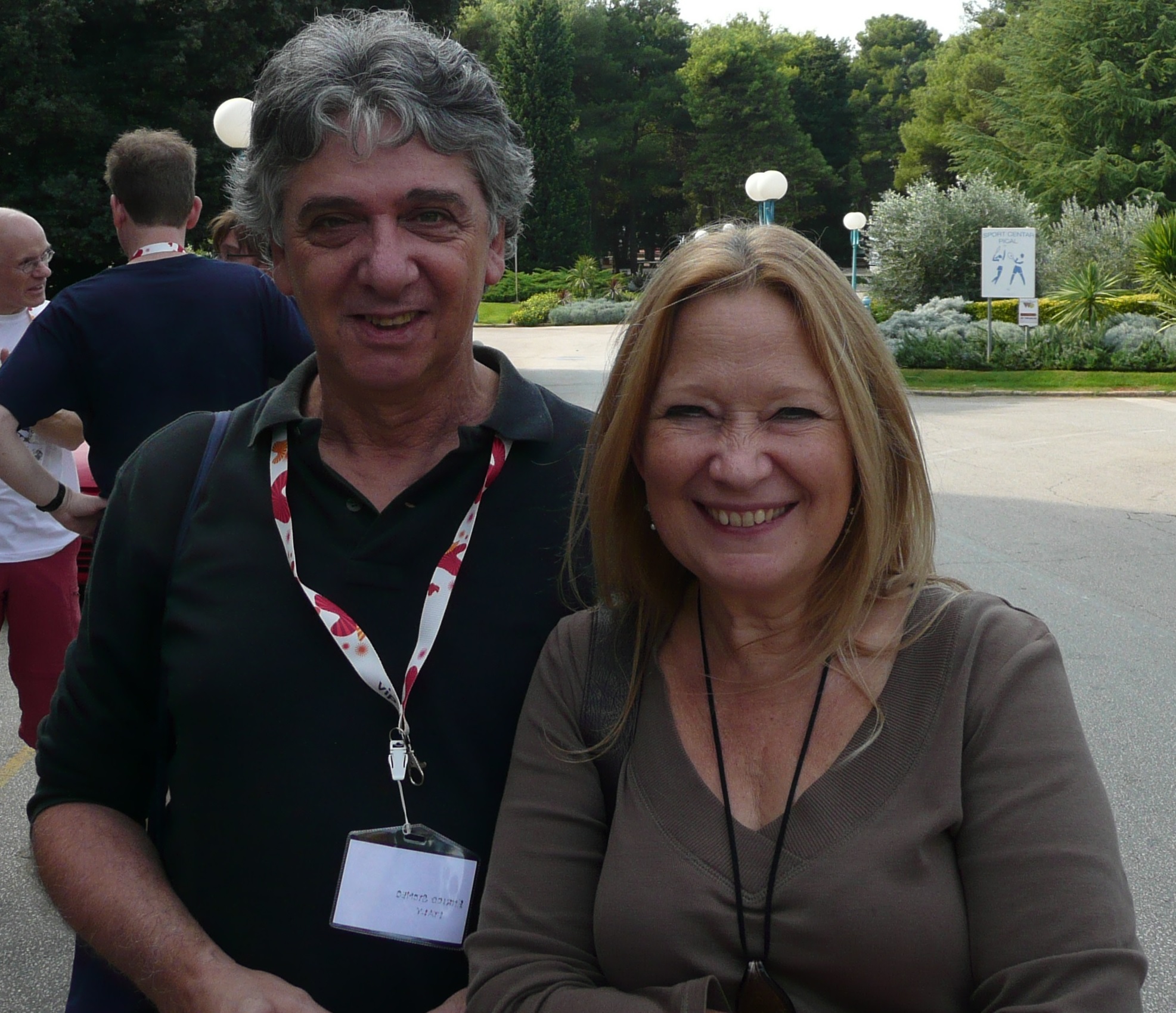
Enrico Stomeo and his wife Marina Bolis at the International Meteor Conference at Porec, Croatia in 2009.
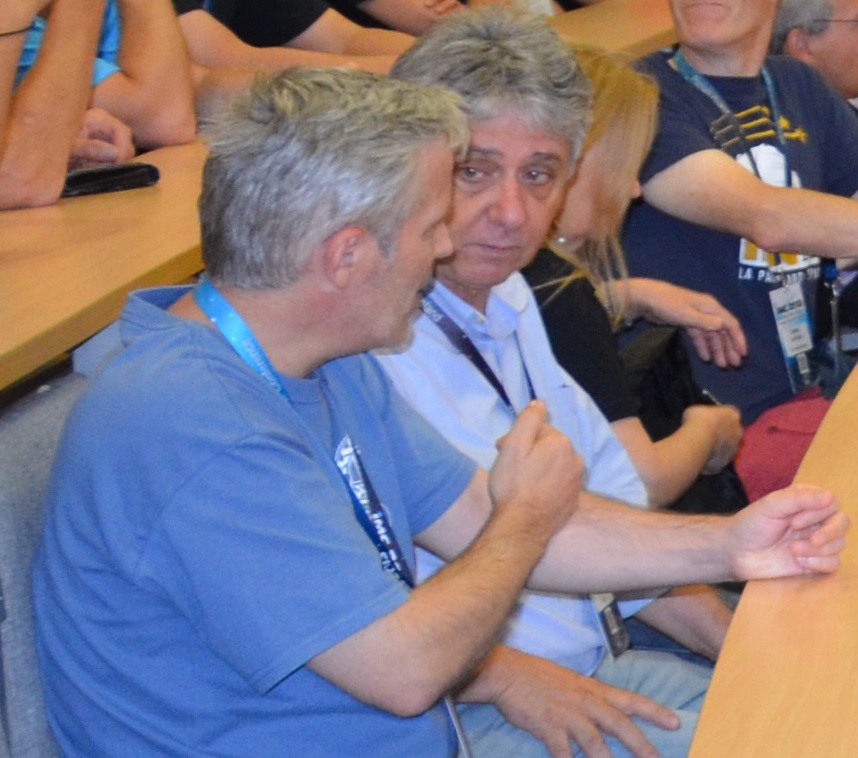
Damir Segon (left) and Enrico Stomeo (right) at the International Meteor Conference at Poznan, Poland in 2013.
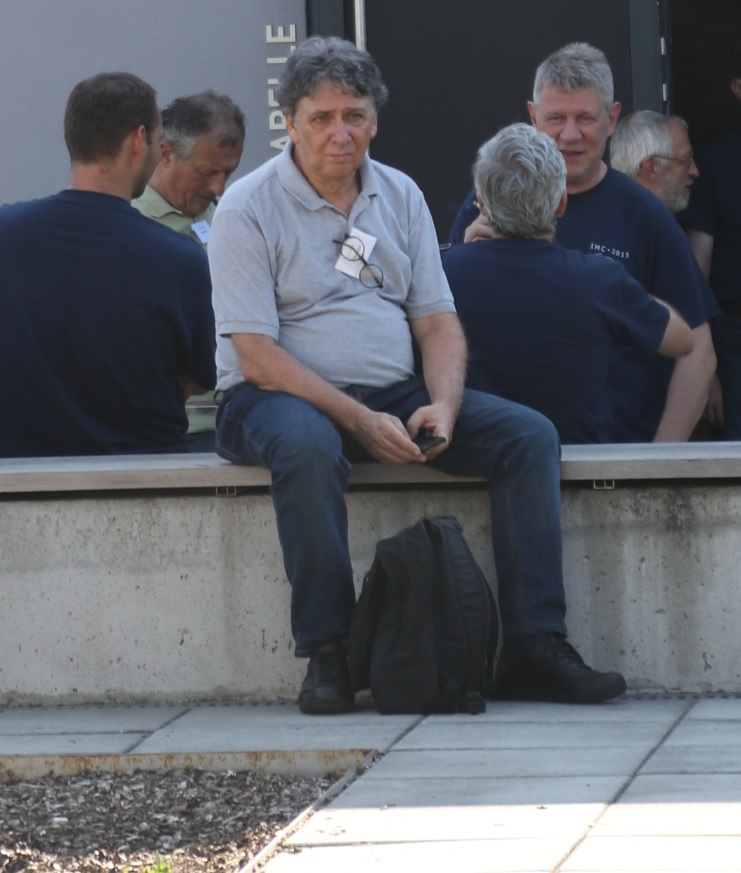
Enrico Stomeo during a break at the International Meteor Conference at Mistelbach, Austria in 2015.
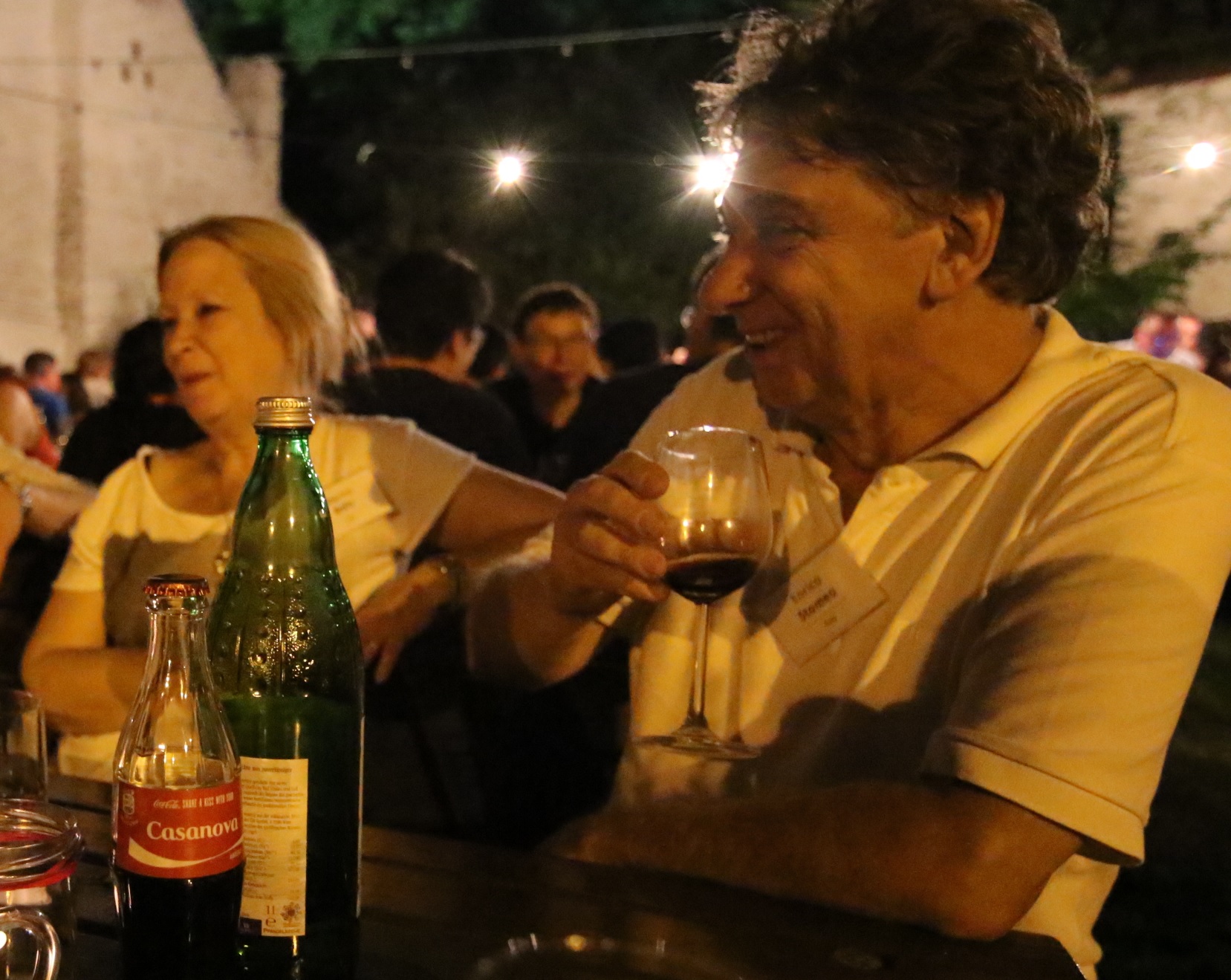
Enrico Stomeo during the last night of the International Meteor Conference at Mistelbach, Austria in 2015.
On a more conventional level, Enrico wrote countless articles, participated in the construction of the Venice Planetarium, attended numerous congresses and conferences, and took part in several missions to observe meteors or field searches for meteorites.
In recent years, he was awarded two honors: the Ruggieri Prize in 2024 and the Martino Nicolini Prize in 2026.
I hadn’t heard from him in a few years, though I had been following his work; in recent times, while he continued his work, he was a bit less active. Now many of us know why: his health and perhaps even his age were taking their toll, and one day in mid-May I received the unexpected news of his passing away. It wasn’t confirmed at first, but unfortunately, confirmation came in the days that followed. Enrico got 78 years old in April.
I have lost a friend, and Italian astronomy—and not just Italian astronomy—has lost a great amateur astronomer.


Very nice post
Very informative.
Deep condolence for Enrico bereaved family.
Thank you 🙏